anxious attachment style
and how to heal your way out of it

I recently wrote an article on avoidant attachment style, and it really made me think about how humans work. There seems to be consistent parallels between the attachment types, and it’s almost as if each set of traits are completely opposite.
One thing I’ll mention is that permanently labeling yourself as “this” or “that” can be incredibly harmful. Learning more about the attachment styles should leave you with ideas of how to heal your way out of the cycles you’re stuck in, instead of simply justifying your feelings. You don’t read articles like this to confirm your brokenness and the reasons why you feel bad- you read them to learn how to heal from the past and move on with your life.

Some of the behaviors associated with anxious attachment are:
The need to be accepted
Fear of rejection
Clingy behavior
Needing affirmation
Hyper-dependence
Dwelling on emotions for too long
Feeling lost outside of your relationships
1. The need to be accepted
Everyone desires to be accepted by others in some way or another, and it’s easy for it to become an unhealthy obsession. People will distort themselves to fit into someone else’s picture, and they’ll forget who they are in that process1.
The thing is- those who truly love you won’t ask you to become someone else.
“I’ll change every part of me, until the puzzle pieces aren’t me at all… I look in the mirror, now I’m just a jigsaw.” -Conan Gray (his song Jigsaw)
It can be difficult accepting that fate- that not everyone you meet will love you and cherish you for who you are- but if you refuse to, you’ll no longer be you. Would you rather be able to face your reflection and appreciate the person you see, or have more (fake) friends?
“If I was empty space and you were a formless shape, we’d fit.” -Noah Kahan (his song Strawberry Wine)
What healing looks like: You have to stop people-pleasing and making yourself less you. Don’t choose relationships that aren’t genuine over being your real self. If you decide to live like that, you’ll be the person who’s hindering you from finding your real community.
2. Fear of rejection
Rejection is scary. It is. But you can’t live in fear of it, or else you won’t live at all.
On that note, your self-esteem shouldn’t be tied to what other people think of you. If it is, you’ll never consider yourself good enough because you can’t please everyone at the same time. You can value a mentor or a friend’s opinion, but you shouldn’t make decisions just for their approval.
What healing looks like: Some people actually try to seek rejection to get over it (if you search “rejection therapy challenge” on social media you’ll find examples)- and many of them have a great time doing so. It’s ok to disappoint people who have different expectations for your life than you do.

3. Dwelling on emotions too much2
Emotions are an important part of being human. Without empathy or passion, humanity would be a pretty dull species.
However, emotional regulation is a skill that will benefit your life in countless ways. I’m not going to claim that you can’t live without it, because many people choose to. But it will significantly improve your life and relationships if you can keep your emotions under control.
I’m going to make a really odd analogy- stay with me- emotions are like toddlers. They can be dramatic, they’re not always trustworthy, and they can be dangerous when left unsupervised. You get to choose what to do with the toddlers in your mind. Are you going to let them run around and cause chaos, or are you going to be the mature and calm one in control?
Learning your triggers and experimenting with types of meditation (any hobby or task that can calm you) are practical ways to grow and learn about your emotions3.
It isn’t easy to stop overthinking or learn how to handle anger, but doing the work pays off and results in a better you. Anxiety won’t help you4.
“Can any one of you by worrying add a single hour to your life?” -Matthew 6:27 (NIV)
What healing looks like: There’s not a simple solution for emotional regulation and intelligence5. It’s a daily choice that takes an insane amount of discipline. Healing is a complicated route, but doing the work to understand yourself will pay off in every aspect of your life.
4. Clingy behavior
This is one of the biggest differences between the attachment types. Avoidant attachment is associated with avoidant/cold behavior, while anxious attachment is associated with anxious/clingy behavior.
I think there are two main reasons someone might be “clingy”, but they both stem from the fear of being forgotten.
Number one is the fear that people will leave, move on from you, and forget entirely about your existence.
Two is that some people need consistent attention or constant stimulus6. This may be because they’re anxious that people will forget about them if there’s a lack of texting, or that they’re afraid to be bored because that can mean sitting with your feelings alone.
What healing looks like: Relationships that can withstand space and silence tend to do really well. Being forgotten isn’t easy, but it’s a part of life. You’re worth something even if people leave.

5. Needing affirmation
One thing that’s easy to want is validation from others. But a “good job” from someone shouldn’t be what motivates you.
If you need reassurance, affirmation, validation, it will eventually lead to people pleasing. If you live a life of people pleasing, you’ll never do great things. You’ll fear abandonment, and in turn try to avoid all conflicts. You’ll repress yourself so others will be able to handle you. And that’s not living.
What healing looks like: Don’t do things simply for other people’s approval. Do things for you- so you can approve of yourself.
6. Hyper-dependence
This ties back to clingy or anxious behavior and the need for validation.
It’s not a bad thing to have a community that you rely on, but it’s unhealthy to rely on that community for everything. If you seek certain things from others, like motivation, you’ll never find a strong sense of it. There are some things you have to find yourself.
It’s a humbling experience to ask for help, and it’s great that some people can do so easily. But there are some things that community just can’t find for you.
What healing looks like: Figure out where you draw the line- some of your relationships rely on you working that out.
7. Feeling lost without relationships
It’s easy to lose yourself in your relationships with other people. When you invest so much into someone and they leave, it can feel like they took a part of you with them. And in a way, they do. But you still remain.
It’s an amazing thing to have deep bonds with others, but there is a line where you end and that person begins. You are still a person outside of your relationships.
What healing looks like: Don’t confuse your roles (employee, parent, sibling, etc.) with your personhood. You are you. Don’t forget that.

If you’d like to read the article I wrote on avoidant attachment, you can read it here.
Thank you for reading! <3
A YouTube short about how to find people like you (I love this analogy)
A YouTube video about emotional regulation
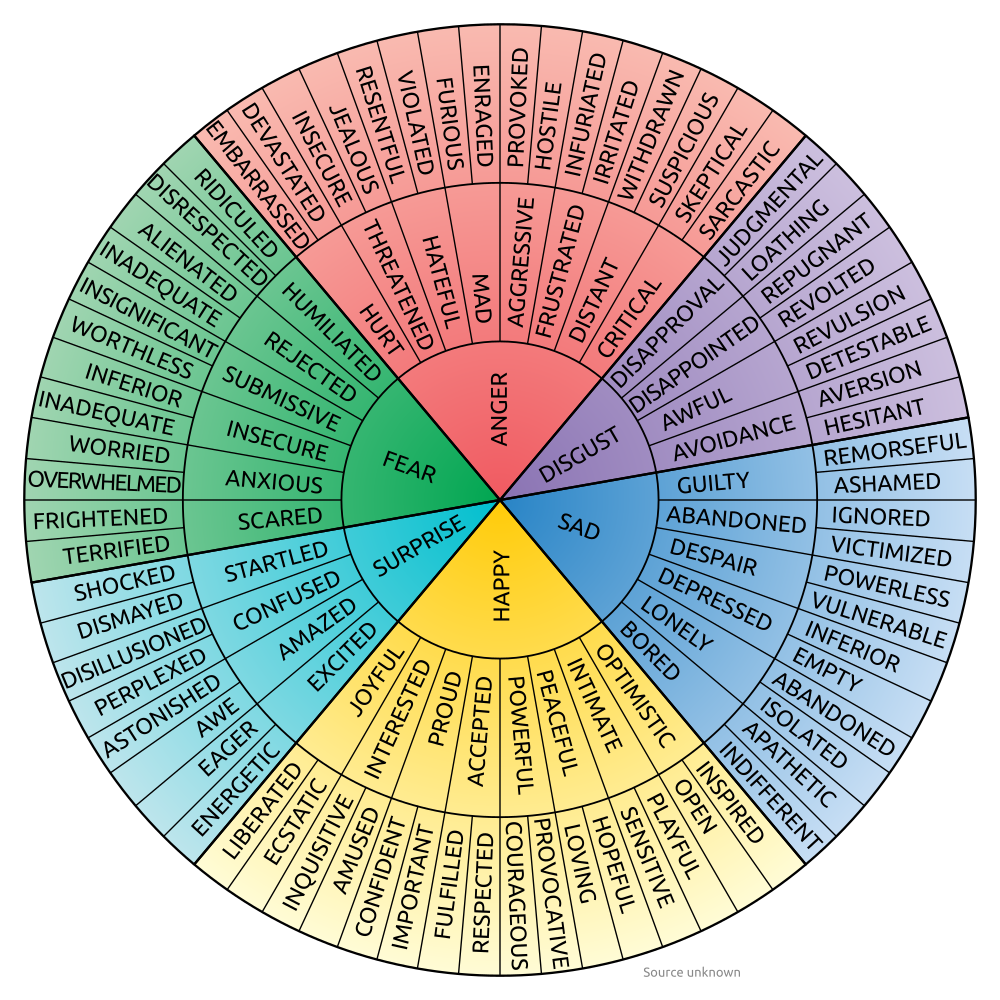
There are “emotion charts/wheels” that you can look up that have an in-depth list of kinds of emotions.
A YouTube short about how to change your perspective on your anxiety
There’s a difference between the two. I like this definition, that emotional regulation is a “set of goals and strategies” that can help you prevent, enhance, and deal with different emotions.
As I was researching this, I found some studies that stated that people with ADHD might tend to lean towards anxious attachment rather than avoidant attachment. None of them were strongly affirmative or ground-breaking studies, but I was surprised at the amount of studies that had been done.